Expert Advice: How to Spot (and Fix) Gas Fireplace Safety Hazards
Gas log fireplace repair is often simpler than homeowners expect. Many common issues can be resolved by checking fuel and power, inspecting the pilot light and logs, and performing basic cleaning. This guide also covers when to call a professional and how to weigh repair versus replacement costs.
Common signs your gas log fireplace needs attention:
- Pilot light issues (won’t stay lit, yellow flame)
- Unusual odors (gas, dust, musty smells)
- Heavy soot buildup on logs or glass doors
- Fireplace won’t start
- Unbalanced or weak flames
- Visible cracks in ceramic logs
Why Prompt Repairs Matter
A malfunctioning fireplace is more than an inconvenience; it’s a safety risk:
Safety hazards include:
- Carbon monoxide (CO) buildup due to poor combustion or blocked vents
- Gas leaks from damaged lines or valves
- Fire risks from damaged components that can’t contain heat
- Inefficient heating that wastes fuel and money
Industry data shows that while annual inspections are recommended for safety and efficiency, many homeowners wait for a breakdown before seeking service.
I’m James Thomas. With over four decades of experience in HVAC and gas log fireplace repair in North Georgia, I’ve seen how proactive maintenance prevents emergencies. This guide will help you identify what to check, what you can fix, and when to call a professional for issues like a stubborn pilot light or an aging unit.
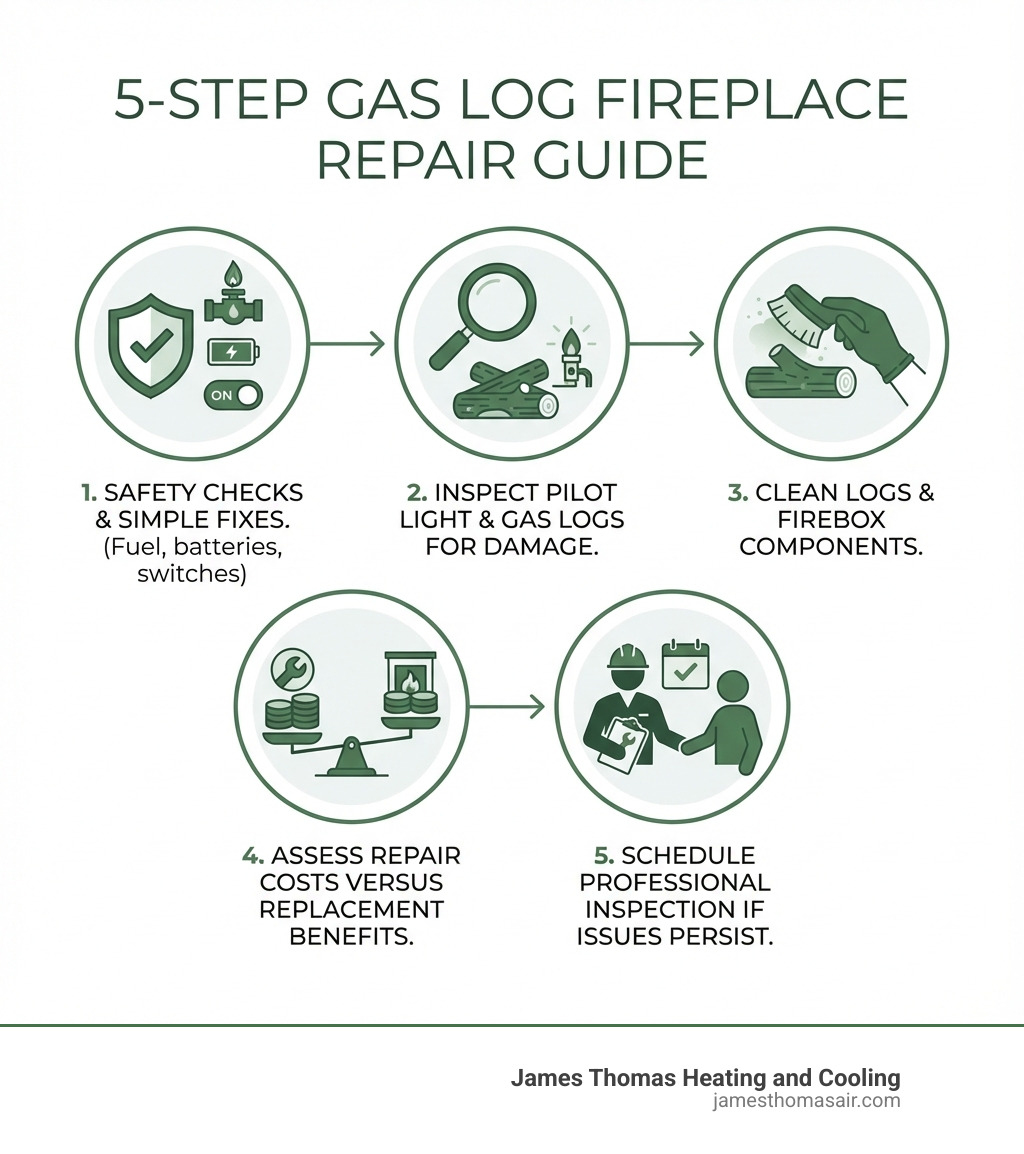
Your 5-Step Guide to Gas Log Fireplace Repair
Before calling for service, let’s walk through common gas log fireplace repair issues. Often, a major-seeming problem has a simple fix.
Step 1: Perform Initial Safety Checks and Simple Fixes
Start with these basic checks, which address the most common reasons a gas fireplace fails to operate.
Fuel Supply: Ensure your propane tank isn’t empty or that the valve for your natural gas line is fully open. A closed or partially open valve is a common reason for a fireplace not starting.
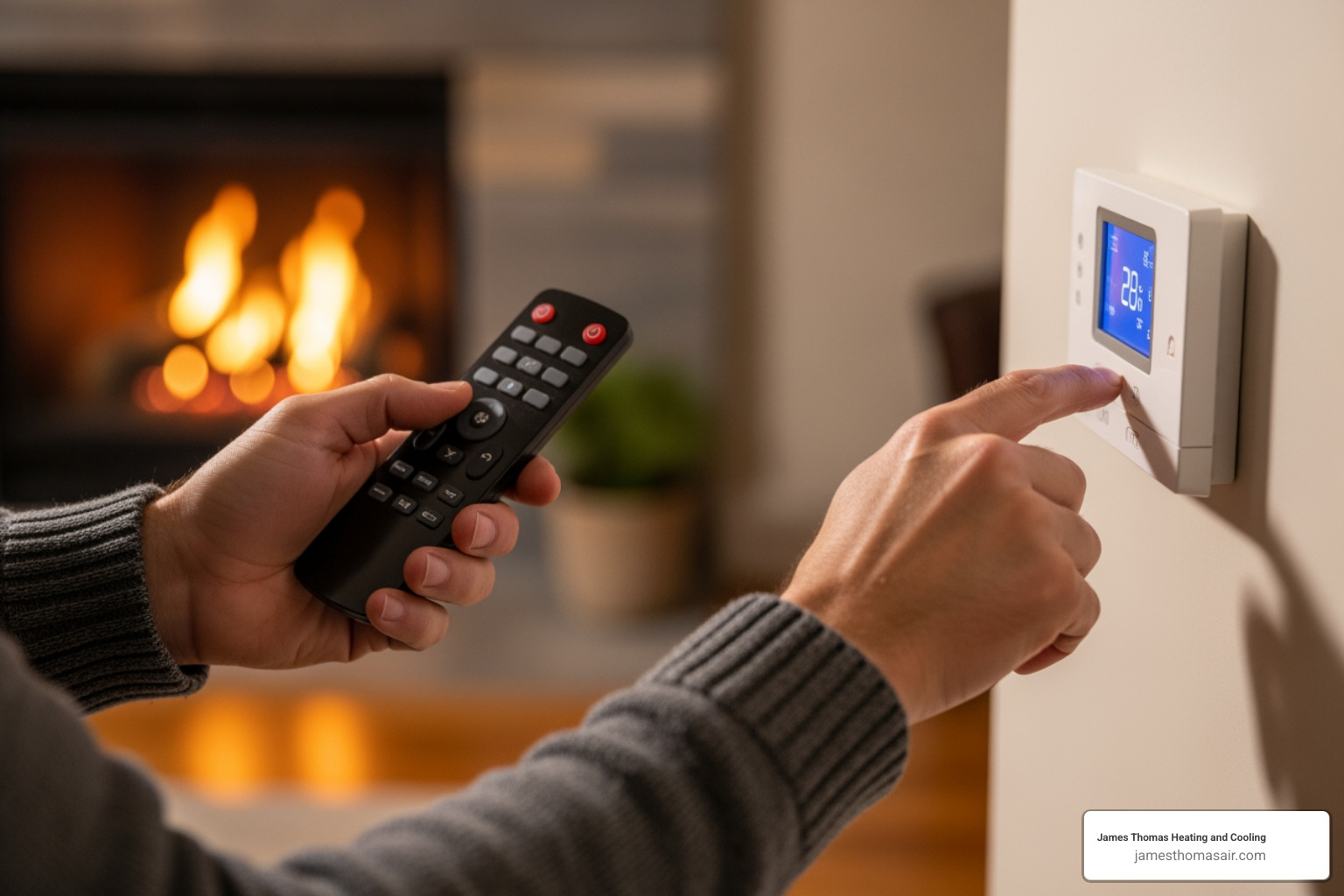
Remote Control Batteries: Replace the batteries in your remote. This simple DIY fix can often save a service call.
Wall Switch and Circuit Breaker: Confirm the wall switch is on. For electronic ignition models, check your home’s electrical panel for a tripped circuit breaker.
Thermostat Settings: If your fireplace uses a thermostat, make sure it’s set to a temperature higher than the current room temperature.
If these steps don’t work, it’s time for a deeper inspection.
Step 2: Inspect the Pilot Light and Gas Logs
The pilot light ignites the main burner, while the gas logs’ condition and placement are vital for performance and safety. If either is compromised, your fireplace won’t work correctly.
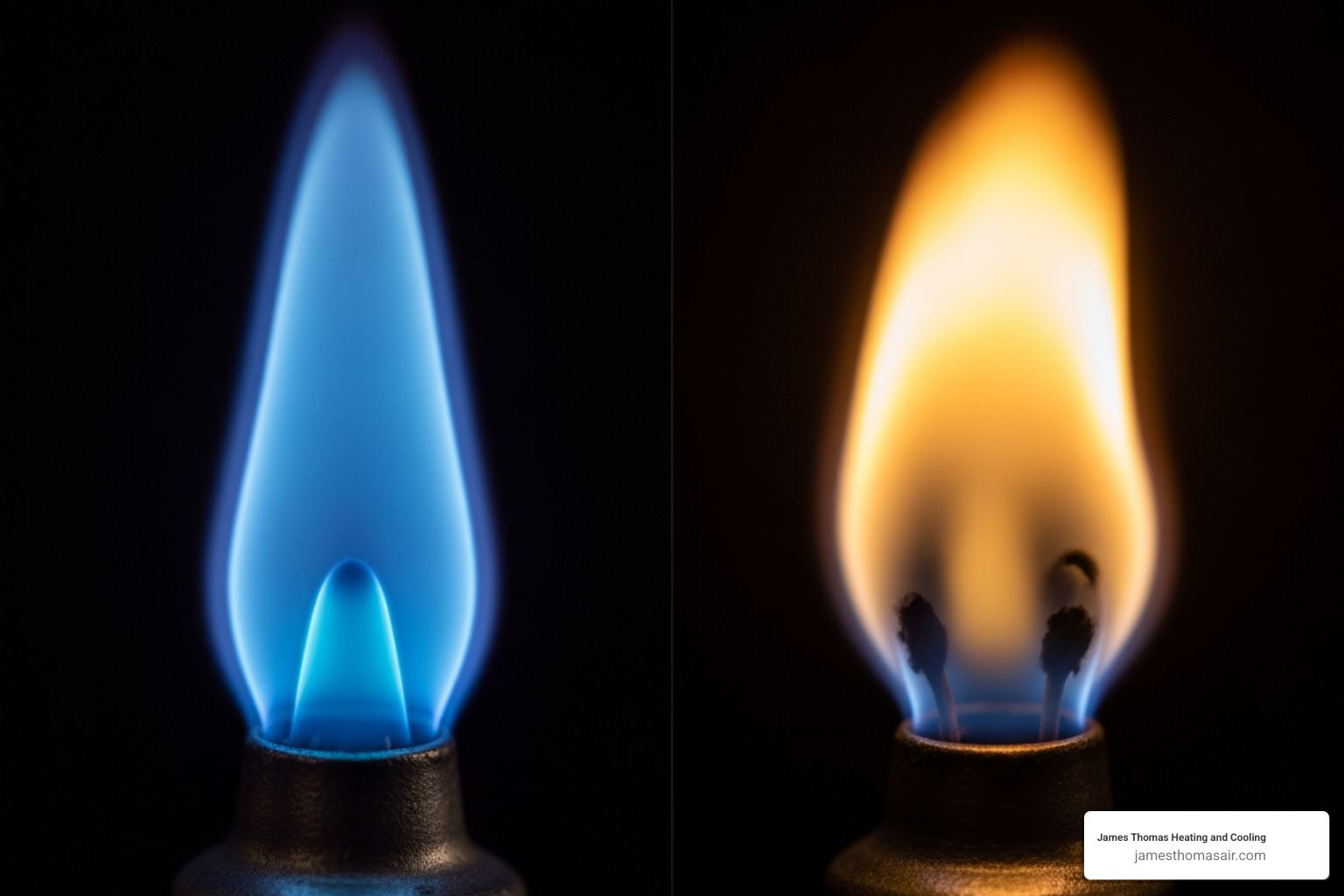
Pilot Light Issues:
- Yellow or Weak Flame: A healthy pilot is a steady blue flame. A yellow, flickering flame indicates poor combustion, possibly from a blockage, and can be a carbon monoxide risk.
- Pilot Won’t Stay Lit: This common issue often points to a dirty or faulty thermocouple or thermopile, a safety device that shuts off gas if it can’t sense the flame.
- Difficulty Lighting: A dirty pilot orifice, weak igniter, or a gas supply problem can make lighting the pilot difficult.
Gas Log Inspection:
- Cracks or Chips: Visually inspect logs for damage. Cracked logs can affect combustion and pose a CO risk. They should be replaced before further use.
- Soot Patterns: Heavy soot on logs indicates inefficient burning and a potential CO hazard, often due to poor log placement or an incorrect gas-air mixture.
- Log Placement: Gas logs must be arranged in a specific pattern, as shown in your owner’s manual, especially for ventless models. Incorrect placement can impede airflow and create a CO hazard.
For more information, visit our Gas Log Fireplace services page.
Step 3: Complete Basic Cleaning and Maintenance
Regular cleaning is essential for gas fireplaces. Neglecting it can lead to operational issues and safety hazards as dust and debris build up.
- Cleaning Gas Logs: First, turn off the gas supply and ensure the fireplace is cool.
- Ceramic Fiber Logs: These are lightweight and porous. Clean them with a soft brush and compressed air only. Never use water or liquid cleaners.
- Refractory Ceramic Logs: These are heavier and can be cleaned with a damp cloth and mild soap. Rinse and dry them completely before re-installing.
- Firebox and Burner: Use a vacuum with a hose attachment to remove dust and soot from the firebox and around the burner. A soft brush can help dislodge debris.
- Vents and Louvers: Use a vacuum or soft cloth to clear dust from vents and louvers to ensure proper airflow and prevent poor combustion.
Oxygen Depletion Sensor (ODS): On vent-free models, find the ODS near the pilot light. Use compressed air to gently clear debris from its small air-intake holes to prevent unexpected shutdowns.
Importance of Annual Cleaning: Annual cleaning prevents clogged components and unpleasant odors, reducing the need for more complex gas log fireplace repair. Proactive care is one of our top HVAC Maintenance Tips.
When to Call a Professional: Repair vs. Replacement
If DIY fixes don’t solve the problem, it’s time to call a professional. Understanding when to call, and whether to repair or replace, can save you time and money.
Factors Influencing the Cost of Gas Log Fireplace Repair
The cost of gas log fireplace repair varies based on several factors:
- Component Costs: The price of the specific part, such as a thermocouple, gas valve, or igniter, is a primary factor. Gas valves are typically more expensive to replace than thermocouples.
- Labor Rates: Costs reflect the repair’s complexity and the technician’s time and expertise.
- Accessibility: Difficult-to-access units may require more labor, increasing the cost.
- Age and Model: Parts for older or obscure models can be hard to find and more expensive. Newer units may have costly proprietary parts.
- Extent of Damage: A minor clog is far less expensive to fix than a damaged burner or a gas leak. Prompt repairs prevent costs from escalating.
Deciding Between Repair and Replacement
Deciding whether to repair or replace involves weighing immediate costs against long-term value, efficiency, and aesthetics.
| Feature | Repairing Your Gas Log Fireplace | Replacing Your Gas Log Fireplace |
|---|---|---|
| Cost-Effectiveness | Best for minor issues on newer units. Lower upfront cost. | Better long-term value for old units needing frequent repairs. |
| Age of Unit | Good option for units under 10-15 years old. | Recommended for units over 15 years old with visible wear or rust. |
| Aesthetics | Does not change the fireplace’s appearance. | Allows for a complete style update to match modern decor. |
| Home Value | Maintains existing value. | Can increase home value. An updated fireplace is an attractive feature for buyers. |
| Technology | No access to new features or efficiency gains. | Gain modern features like remote controls, smart home integration, and improved energy efficiency. |
| Functionality | Addresses a specific problem but doesn’t upgrade performance. | Opportunity to choose a unit that better fits your lifestyle and heating needs. |
| Surround & Facing | Does not address an outdated or damaged surround. | Ideal when the surround is also being updated for a cohesive new look. |
| Peace of Mind | Fixes the immediate issue, but other old parts could still fail. | Provides a fresh start with new components, modern safety features, and a warranty. |
The right choice depends on your budget and long-term goals. We can provide an honest assessment to help you decide. Delaying a replacement can lead to higher costs later due to rising prices.
The Importance of Professional Gas Log Fireplace Repair and Maintenance
While DIY fixes are useful, professional help is essential for safety and complex issues involving gas appliances.
Safety Hazards: A malfunctioning fireplace poses serious risks:
- Carbon Monoxide (CO): Incomplete combustion from blocked vents or damaged logs can produce this odorless, deadly gas.
- Gas Leaks: Faulty connections or lines are a significant fire and explosion hazard. If you smell gas, evacuate and call for help.
- Blocked Flue: A blocked flue pipe can cause exhaust gases to vent back into your home.
Annual Professional Inspections: Gas fireplaces need an annual inspection by a certified professional to ensure safe, efficient operation. This includes checking ventilation, cleaning the system, and inspecting gas lines. Our NFI-certified experts ensure your fireplace works safely.
Our Expertise: James Thomas Heating and Cooling has served Fannin County and surrounding areas for over two decades. We specialize in complex gas log fireplace issues and provide 24/7 emergency service because we are committed to keeping your home warm and safe.
Don’t let a faulty fireplace compromise your comfort or safety. If you have persistent issues or need your annual inspection, Schedule your professional Heating Repair today with James Thomas Heating and Cooling to ensure your home stays warm and safe.

Recent Articles


How Much Does a Replacement AC Unit Cost in 2026?
By James Thomas |

The Ins and Outs of Energy Efficient AC Installation Cost
By James Thomas |