
The Benefits of Proper HVAC Humidity Control and Humidifiers
Why Does Your Home Feel Sticky, Stuffy, or Oddly Dry Even When the Thermostat Looks Right?
Proper humidity control is how your heating and cooling system manages moisture in the air, and it is something you need to get right for comfort, health, and home protection.
James Thomas Heating and Cooling can help you understand what your system is doing, why humidity may feel out of balance, and what steps can bring your indoor air back to a healthier, more comfortable range.
- What it is: HVAC systems remove excess moisture during cooling and can add moisture during heating to maintain ideal indoor humidity levels
- Why it matters: Proper humidity control (30-50% relative humidity) prevents mold growth, improves comfort, protects your home’s structure, and reduces energy costs
- How it works: Air conditioners naturally remove some humidity through condensation on the evaporator coil; dedicated dehumidifiers or humidifiers provide additional control when needed
- Common problems: Oversized AC units, single-speed systems, incorrect thermostat settings, and poor maintenance can all cause humidity control failures
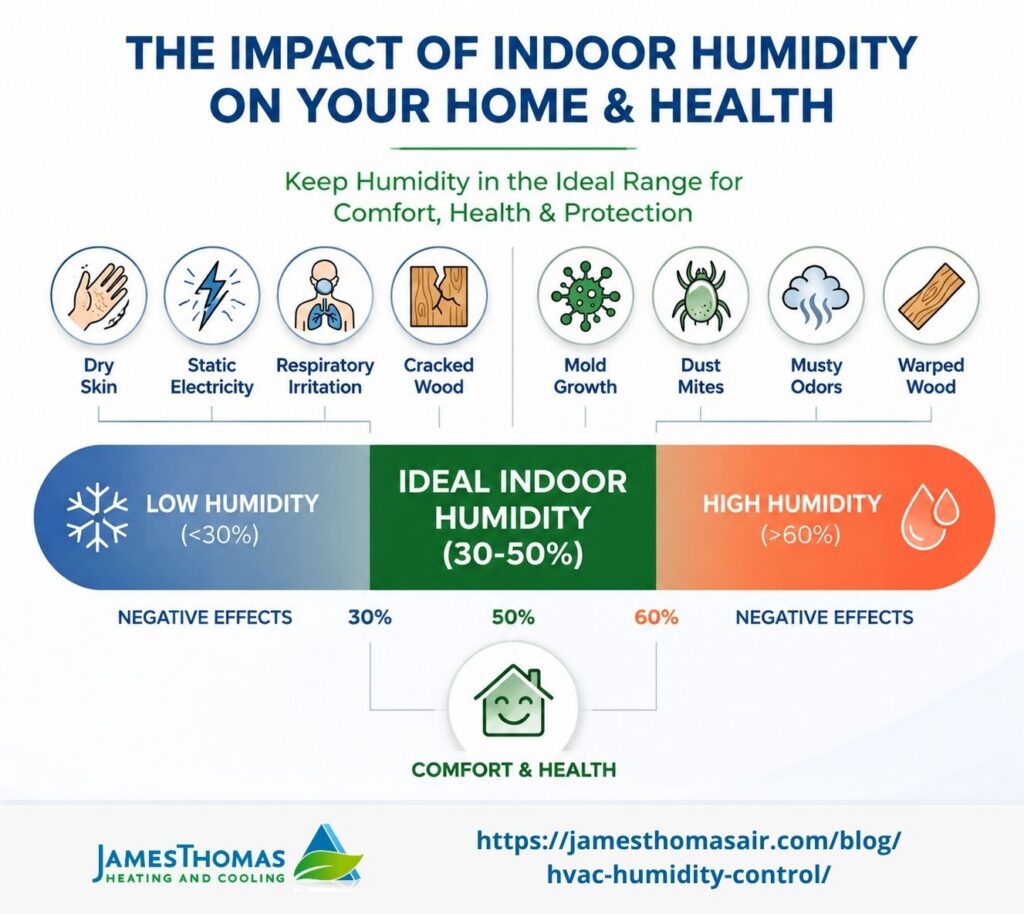
You’ve probably heard the saying, “It’s not the heat, it’s the humidity.” That’s because humidity directly affects how warm or cool you actually feel, regardless of what your thermostat reads. When the air in your home is too humid, you feel sticky and uncomfortable, even at reasonable temperatures. When it’s too dry, you experience itchy skin, static shocks, and respiratory irritation.
Your HVAC system does more than just heat and cool your home. It also plays a critical role in managing indoor moisture levels. But here’s the catch: many modern HVAC systems struggle to control humidity effectively, especially during mild weather or in energy-efficient homes with lower cooling needs.
High humidity creates a breeding ground for mold, mildew, and dust mites, all of which trigger allergies and respiratory problems. It can also damage your home’s structure, causing wood to warp, paint to peel, and creating that musty smell nobody wants. On the flip side, air that’s too dry leads to cracked woodwork, uncomfortable dry skin, and even increased spread of airborne viruses.
The good news? With the right knowledge and equipment, you can achieve that perfect balance where your home feels comfortable year-round and your family stays healthy. I’m James Thomas, and I’ve been helping homeowners in North Georgia solve HVAC systems and humidity control challenges for over four decades. In this guide, I’ll walk you through exactly how humidity control works and how to optimize it in your home.
Why Does Humidity Impact Your Home and Health?
Humidity, simply put, is the amount of water vapor present in the air. When we talk about indoor humidity, we’re usually referring to relative humidity (RH), the percentage of water vapor in the air compared to the maximum amount it can hold at a given temperature before it starts to condense. This seemingly simple factor holds immense power over our comfort, our health, and even the integrity of our homes here in places like Fannin County, Georgia, and the surrounding areas.
Think about those sweltering summer days in Blue Ridge or Copperhill. Even if the temperature reading isn’t sky-high, a high humidity level can make it feel oppressive. This is because our bodies cool themselves primarily through the evaporation of sweat. When the air is already saturated with moisture, sweat can’t evaporate as efficiently, making us feel hotter and less comfortable. This phenomenon is why people often say, “It’s not the heat, it’s the humidity.” Conversely, in the colder months in Ellijay or Ducktown, low humidity can make the air feel colder than the thermostat indicates, as moisture evaporates too quickly from our skin, leading to a chilling effect.
What Are the Dangers of High Humidity?
When indoor humidity levels consistently creep above 60%, especially in our hot and humid summers, we open the door to a host of problems. High humidity creates a ‘stuffy’ feeling, making indoor environments feel warmer than they are. This often leads us to crank down the thermostat further, resulting in increased energy use and higher utility bills.
But discomfort is just the beginning. High moisture levels are an open invitation for trouble:
- Mold and Mildew Growth: A huge con of having too much indoor humidity without proper ventilation is the potential for mold and mildew growth. Humid environments are ideal for them to thrive, and they can multiply very quickly if your space traps wet air and things don’t adequately dry out. This is a common issue in our region.
- Dust Mites, Allergies, and Respiratory Issues: High humidity is a haven for dust mites, a common allergen. Mold spores and dust mites can trigger allergies, asthma, and other respiratory problems, affecting your family’s health.
- Property Damage: Excess moisture isn’t kind to our homes. It can lead to warped wood floors, doors, and furniture, peeling paint, and even structural damage over time. Musty odors are often the first sign of hidden moisture problems.
- Increased Strain on HVAC Systems: High humidity places additional strain on HVAC systems, resulting in longer operating hours and more frequent maintenance and repairs.
The Problems with Low Humidity
While high humidity gets a lot of attention, excessively low humidity (below 30%) also presents its own set of challenges, particularly during our colder winter months in areas like Blairsville and Jasper when heating systems are running constantly.
- Dry Skin, Itchy Eyes, Sore Throat, Chapped Lips: Low humidity strips moisture from our bodies, leading to uncomfortable dryness.
- Static Electricity: Ever get zapped walking across the carpet? Low humidity is often the culprit, leading to increased static electricity.
- Increased Virus Survival: Studies suggest that viruses, including those causing the common cold and flu, can survive longer and spread more easily in very dry indoor air.
- Damage to Wood Items: Just as high humidity can warp wood, low humidity can cause wooden furniture, flooring, and musical instruments to dry out, crack, and become brittle.
- Feeling Colder: As mentioned, rapid evaporation from the skin in dry air can make us feel colder, prompting us to turn up the heat and use more energy.
It’s clear that both extremes are problematic. The truth of the matter is, high humidity does make you feel hotter and less comfortable because your body cools itself by releasing water and salt through open pores, by sweating. The amount of sweat that evaporates into the air (which is what cools you) is affected by the amount of moisture already in the air. When the air is saturated, less sweat can evaporate, making you feel hotter.
What is the Ideal Indoor Humidity Level?
So, what’s the sweet spot for indoor humidity? According to the Environmental Protection Agency (EPA), indoor humidity levels should ideally stay between 30% and 50% to combat common moisture-related issues like dust mites and mold growth. Other industry standards, like those from ASHRAE, generally recommend an ideal indoor humidity level for human health and comfort between 30% and 60%.
We find that for most homes in North Georgia and Tennessee, maintaining a relative humidity between 40% and 55% offers the best balance of comfort and health benefits year-round. This range helps prevent mold and dust mite proliferation, protects your home’s structure, and minimizes discomfort.
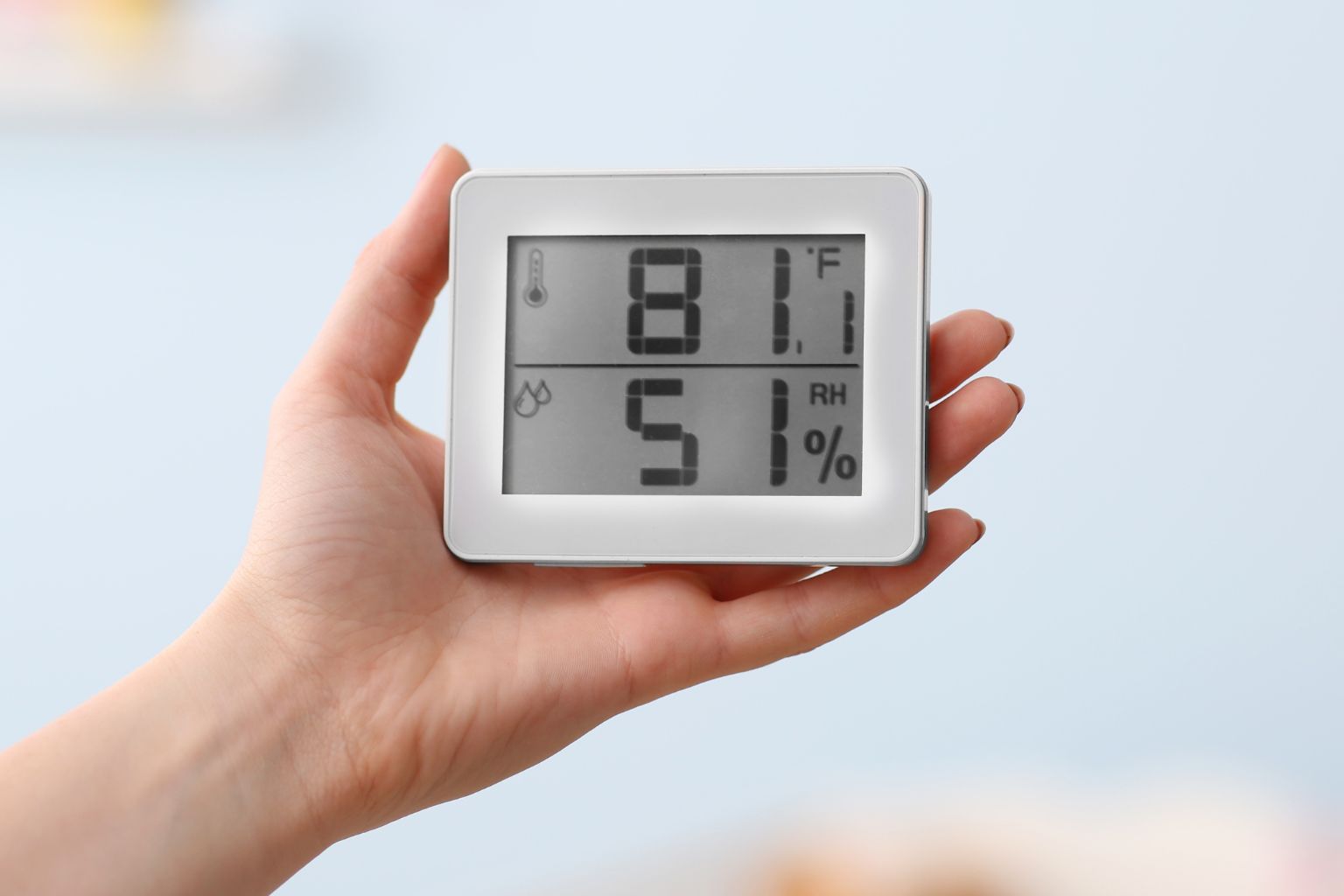
To assess your current indoor humidity levels, you can use a simple hygrometer (available at most hardware stores), some smart thermostats have built-in sensors, or you can even try a DIY test like placing an ice cube in a glass of water and observing condensation.
How Does Your HVAC System Manage Humidity, and Why Does It Sometimes Fail?
Your HVAC system is your primary tool for humidity control. But while it’s designed to manage temperature, its ability to handle moisture is often a secondary function, and sometimes, it falls short.
The Standard Dehumidification Process
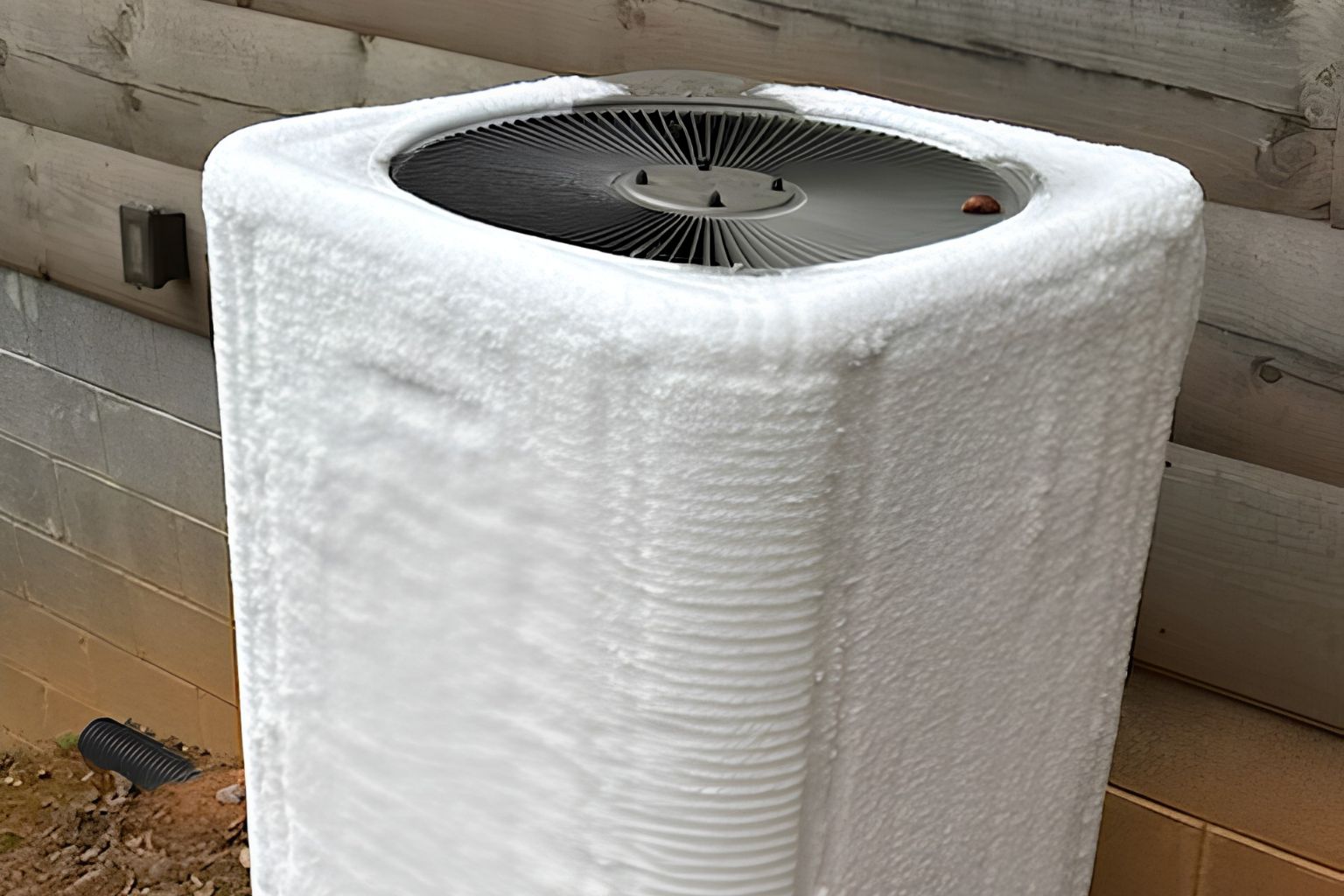
When your air conditioner runs, it doesn’t just cool the air; it also removes some moisture. This is a natural byproduct of the refrigeration cycle:
- Warm, Humid Air Enters: Warm, humid air from your home is drawn into the indoor unit (air handler).
- Contact with Cold Coil: This air passes over the evaporator coil, which is very cold because it contains refrigerant.
- Condensation Occurs: As the warm, moist air hits the cold coil, the water vapor in the air condenses into liquid water, much like moisture forming on a cold glass of water on a hot day. This is the dehumidification process in action.
- Moisture Drains Away: This condensed water drips into a condensate pan and then drains out of your home through a condensate line.
- Cool, Drier Air Returns: The now cooler and less humid air is then circulated back into your living spaces.
This “incidental dehumidification” is effective to a degree, especially when your AC is running for extended periods during peak cooling demand. However, traditional air conditioners and heat pumps are not specifically designed to control indoor temperature and humidity independently. While the primary function of an air conditioner or a heat pump in cooling mode is to cool your indoor air, during the cooling process, these systems also help reduce indoor humidity levels.
Why Is Humidity Control Ineffective?
Despite this natural process, many homeowners in places like Morganton and Epworth still struggle with uncomfortable humidity. Here’s why your standard HVAC system might be ineffective:
- Oversized HVAC Unit: This is a common culprit. An oversized AC unit is designed to cool a larger space than your home, so it cools your rooms very quickly and then shuts off. This “short-cycling” means the unit doesn’t run long enough to effectively remove moisture from the air. The temperature drops, but the humidity remains high, leaving you feeling cold and clammy. You may need to install a smaller-capacity AC system to fix this problem.
- Single-Speed Systems: Older or more basic HVAC units often only run at one speed, full blast or off. This on-or-off operation makes it difficult to precisely manage humidity, especially during milder weather when less cooling is needed. An air conditioner that’s only capable of running at one speed can have the same problems as one that’s too large when it comes to humidity control.
- Incorrect Thermostat Settings: Leaving your thermostat fan set to “ON” instead of “AUTO” can actually increase indoor humidity. When the cooling cycle ends, the fan continues to blow air over the wet evaporator coil, re-evaporating some of that moisture back into your home. Always use the “AUTO” setting for optimal humidity control.
- Leaky Ductwork and Poor Sealing: If your home has leaks around windows, doors, or in your ductwork, humid outdoor air can easily infiltrate your indoor spaces. This constant influx of moisture can overwhelm your HVAC system’s ability to dehumidify. If your home does not have adequate ventilation, then any water vapor circulating in the environment has nowhere to go, resulting in trapped, humid indoor air.
- Negative Air Pressure: This occurs when more air is exhausted from your home than is brought in, creating a slight vacuum that draws in unconditioned, humid outdoor air through every crack and crevice.
- Clogged Air Filters: A dirty or clogged Air Filter Replacement restricts airflow, making your system work harder and less efficiently. This can reduce its ability to cool and dehumidify effectively.
The Critical Role of HVAC Maintenance
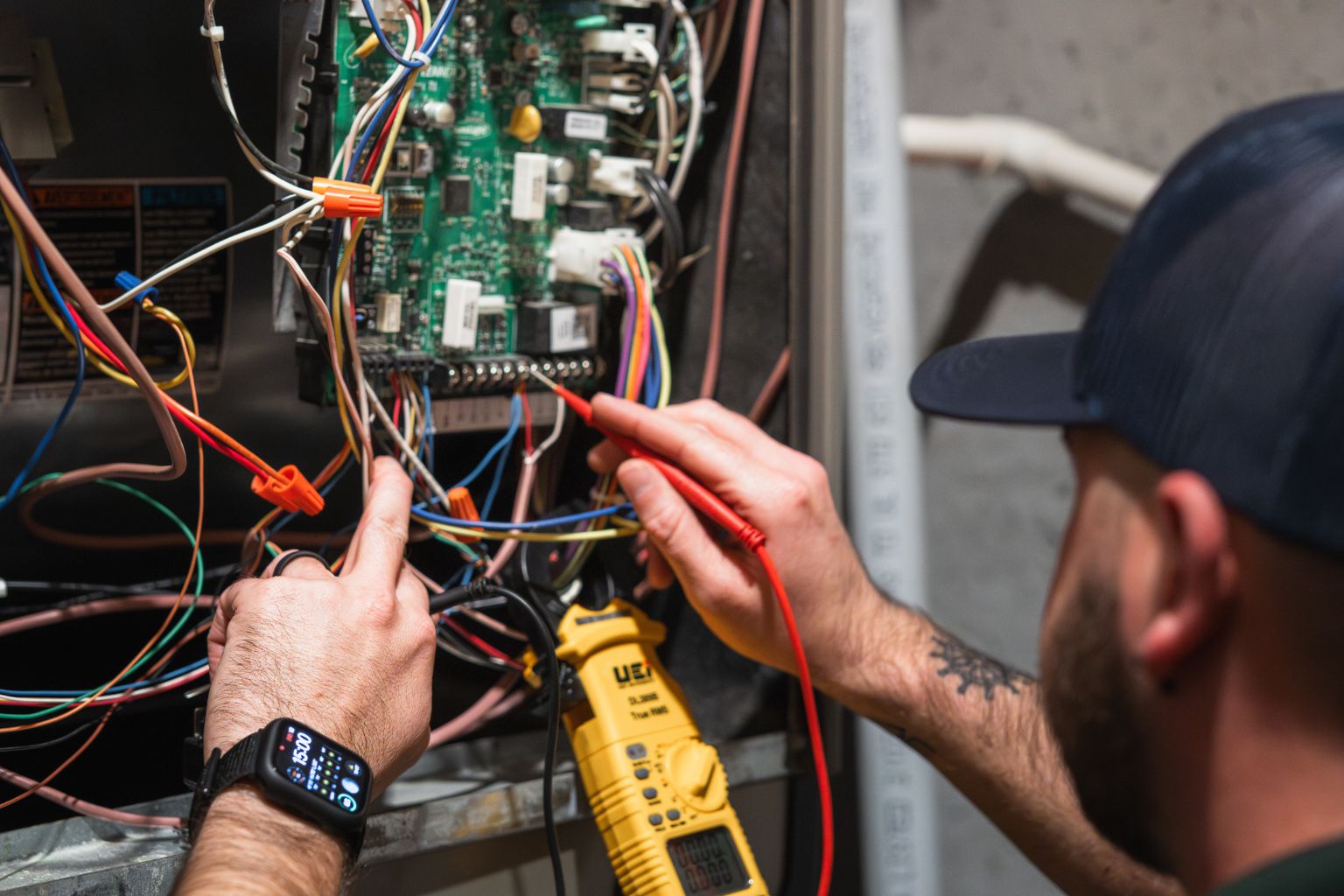
Regular maintenance is paramount for effective humidity control. Our team at James Thomas Air can attest that many humidity issues stem from a lack of routine care.
- Dirty Coils: Over time, evaporator coils can accumulate dirt and grime. A dirty coil cannot get as cold as a clean one, reducing its ability to condense moisture.
- Clogged Drain Lines: If the condensate drain line gets clogged with algae or debris, the water can back up, causing leaks and potentially re-evaporating into the air stream.
- Low Refrigerant Levels: Insufficient refrigerant prevents your AC from cooling effectively, which in turn impairs its dehumidification capabilities.
- Airflow Issues: Proper airflow is crucial for both cooling and dehumidifying. Our HVAC Maintenance services include checking and optimizing airflow.
Regular inspections and servicing are the best ways to ensure your HVAC system is prepared to optimally remove humidity and create the most comfortable indoor space. We recommend professional maintenance twice a year, ideally every six months, to keep your system running efficiently and effectively throughout the year, especially for optimal comfort in our variable North Georgia climate.
Advanced Humidity Control Solutions and Strategies
For homes in North Georgia and Tennessee that struggle with persistent humidity issues, or for those seeking the ultimate in comfort and efficiency, there are advanced solutions that go beyond what a standard AC system can provide.
Dedicated Dehumidifiers and Humidifiers
Sometimes, your HVAC system needs a little help. This is where dedicated whole-home solutions come into play:
- Whole-Home Dehumidifiers: These systems are designed specifically to remove excess moisture from your entire home, working independently or in conjunction with your existing HVAC system. They can be integrated into your ductwork, drawing air from your home, removing moisture, and then returning the drier air. Whole-house dehumidifiers can significantly reduce that cold, clammy feeling that often comes with high humidity. They help maintain humidity below 50% relative humidity where dust mites can’t easily survive and can even protect your hardwood flooring from warping. We specialize in Dehumidifier Installation for homes in our service areas.
- Whole-Home Humidifiers: On the flip side, during our dry winter months, low humidity can be a problem. A whole-home humidifier adds moisture to the air throughout your house, preventing dry skin, static electricity, and protecting wood furnishings. These are typically integrated into your HVAC system’s ductwork and controlled by a humidistat. We also offer expert Humidifier Installation to ensure your home stays comfortable year-round.
The key difference between humidifiers and dehumidifiers is their function: humidifiers add moisture to the air, while dehumidifiers remove it. You should use a humidifier when indoor RH is consistently below 30-35% (common in winter) and a dehumidifier when indoor RH is consistently above 55-60% (common in summer).
Upgrading Your System for Better Humidity Control
If your current HVAC system is struggling, an upgrade can significantly improve it.
- Variable-Speed Technology and Inverter Compressors: Unlike single-speed units, variable-speed HVAC systems (which often use inverter compressors) can adjust their output incrementally. This means they can run for longer periods at lower capacities. This extended run time allows them to remove significantly more moisture from the air without overcooling your home. These modulating systems do a much better job of humidity control and provide more consistent temperatures. When it’s time for a new AC system, consider investing in a modulating HVAC system such as a VRF system.
- Higher-Efficiency HVAC Units: Upgrading to higher-efficiency HVAC units, with integrated dehumidification cycles, is another sensible way to improve humidity control. These systems operate more efficiently, offering better temperature and humidity regulation. They can be specified with integrated dehumidification cycles that can recover waste heat for reheat, preventing overcooling while still effectively removing moisture.
- Advanced Dehumidification Features: Some newer systems incorporate technologies that specifically improve dehumidification. For example, some systems are designed to pause the air-circulating blower fan after a cooling cycle, allowing condensation to drain from the indoor coil before the fan restarts. This prevents moisture that has just been removed from being blown back into your home.
Smart HVAC Technology and Ventilation for Superior Humidity Control
Modern homes in areas like Young Harris and Mineral Bluff can benefit immensely from integrating smart technology and effective ventilation strategies into their HVAC system.
- Smart Thermostats and Sensors: A Smart Thermostat Installation can take your home comfort to the next level. Many smart thermostats come with built-in humidity sensors, allowing you to monitor and even control humidity levels automatically. These devices can communicate with your HVAC system or dedicated dehumidifier/humidifier, making adjustments to maintain your desired humidity range without constant manual input.
- Energy Recovery Ventilators (ERVs): ERVs are crucial for managing indoor air quality and humidity, especially in tightly sealed, energy-efficient homes. These systems bring in fresh outdoor air while exhausting stale indoor air. Critically, ERVs transfer heat and moisture between the incoming and outgoing air streams. In summer, they pre-cool and dehumidify the incoming fresh air, reducing the load on your AC. In winter, they transfer heat and moisture from the outgoing stale air to the incoming fresh air, helping to maintain indoor warmth and humidity. This pre-conditioning of outdoor air can significantly contribute to effective humidity control and energy savings.
What Are the Most Common Questions About Humidity Control?
Why is an oversized AC unit bad for removing humidity?
An oversized AC cools the space too quickly, causing it to shut off before it has run long enough to pull a significant amount of moisture from the air. This “short-cycling” satisfies the thermostat’s temperature setting but leaves the air feeling damp and clammy. Since larger units tend to be more powerful, they will cool rooms quickly and turn on and off frequently. A larger AC unit’s cooling capacities might be so powerful that it doesn’t run long enough to effectively dehumidify your home.
What is the ideal indoor humidity level for my home?
The EPA and other experts recommend maintaining indoor relative humidity between 30% and 50%. This range is optimal for comfort, minimizes the risk of mold and dust mites (which thrive above 60%), and prevents issues caused by overly dry air (below 30%). The healthiest indoor space never exceeds a relative humidity level of more than 60%, as this is the maximum moisture content you can maintain before you begin experiencing negative implications from the humidity.
Can I just run my thermostat’s fan to help with humidity?
No, running the fan in the “ON” setting can actually make humidity worse. When the cooling cycle stops, moisture that has condensed on the indoor coil can be re-evaporated and blown back into your home by the constantly running fan. It’s best to use the “AUTO” setting, which ensures the fan only runs when the system is actively heating or cooling, allowing the condensed moisture to drain away properly.
Achieve Perfect Balance with Expert Help
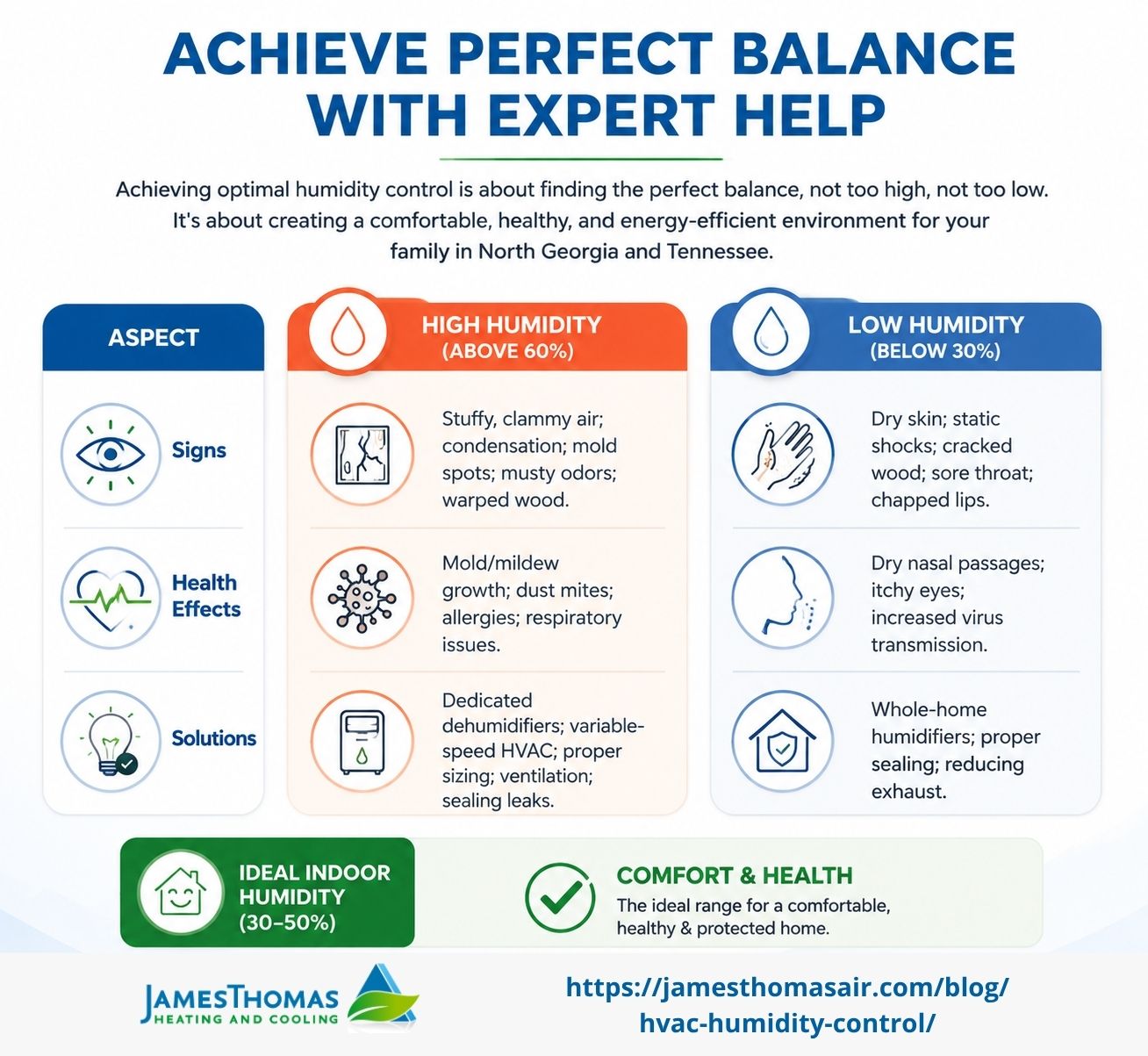
Achieving optimal humidity control is about finding the perfect balance, not too high, not too low. It’s about creating a comfortable, healthy, and energy-efficient environment for your family in North Georgia and Tennessee.
| Aspect | High Humidity (above 60%) | Low Humidity (below 30%) |
|---|---|---|
| Signs | Stuffy, clammy air; condensation; mold spots; musty odors; warped wood. | Dry skin; static shocks; cracked wood; sore throat; chapped lips. |
| Health Effects | Mold/mildew growth; dust mites; allergies; respiratory issues. | Dry nasal passages; itchy eyes; increased virus transmission. |
| Solutions | Dedicated dehumidifiers; variable-speed HVAC; proper sizing; ventilation; sealing leaks. | Whole-home humidifiers; proper sealing; reducing exhaust. |
At James Thomas Air, we understand the unique climate challenges faced by homeowners in Fannin County, Gilmer County, Union County, Towns County, and the surrounding areas, including towns like McCaysville, Hiawassee, and Turtletown. We’ve seen how crucial proper humidity control is for comfort and peace of mind.
If you want to better understand your HVAC system, humidity control, and what it means for your home, James Thomas Heating and Cooling is ready to help. Our experienced technicians can evaluate your system, identify the cause of dry or damp indoor air, and recommend the right fix, from HVAC adjustments to whole-home humidifier or dehumidifier installation.
For balanced comfort and healthier indoor air, contact us today to schedule your humidity control assessment. We are here 24/7 when you need us.
For a complete assessment and professional humidity solutions, explore our Dehumidifier Installation services.

Recent Articles

What Size AC Do I Need? A Blue Ridge Homeowner’s Sizing Guide
By James Thomas |

Does an Expired Warranty Mean It’s Time to Replace Your AC?
By James Thomas |